


INMOST – Industrial Large Knowledge Model for Smart ManufacTuring
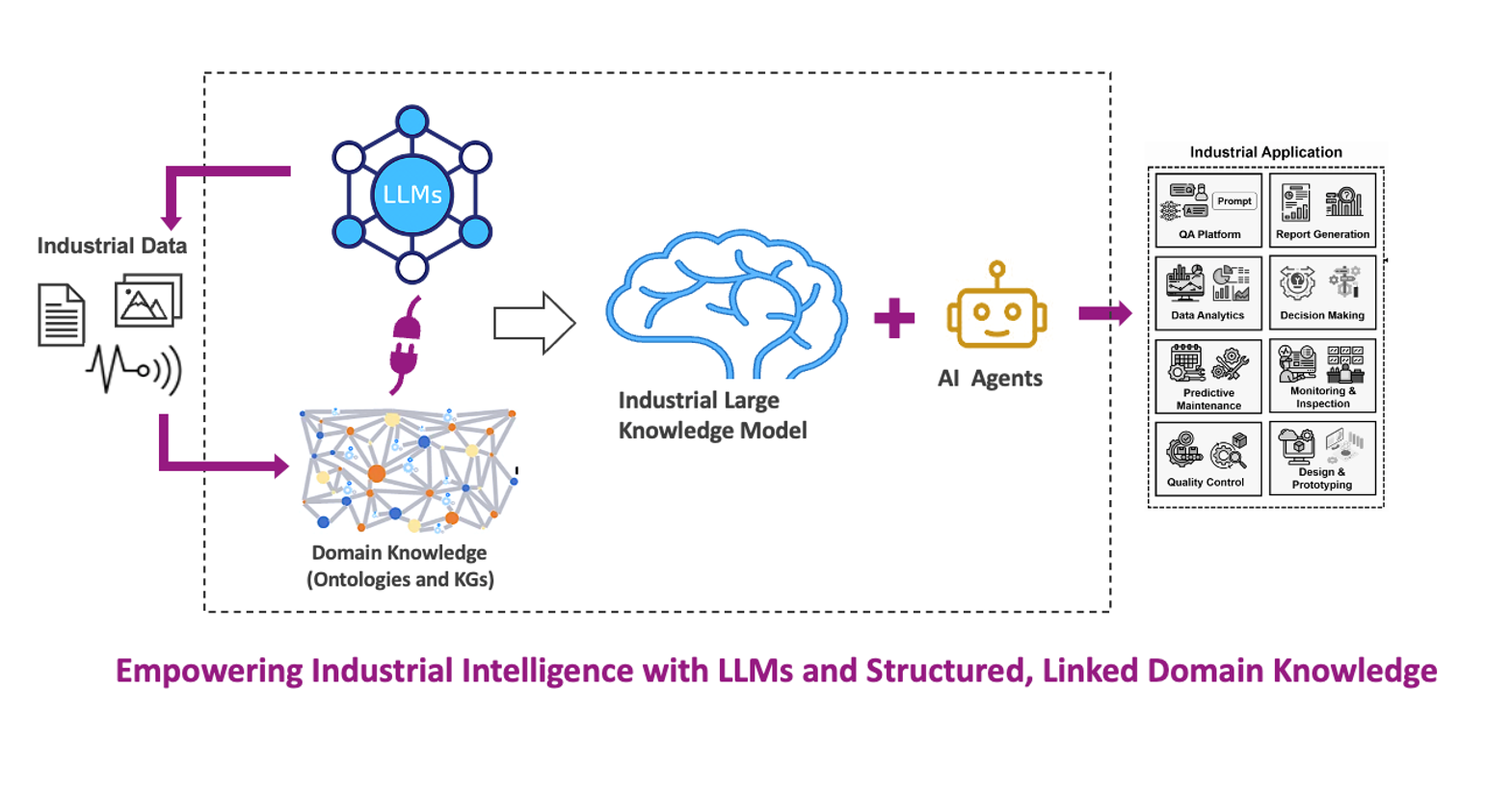
This project aims to integrate LLMs with structured and linked domain knowledge to improve their ability to understand and use manufacturing knowledge. In doing so, it will make LLM-based AI solutions more trustworthy, explainable, and applicable in industrial settings.

The project focuses on transforming raw industrial data, such as logs, reports, and inspection results, into actionable knowledge that supports more informed and efficient decision-making in manufacturing. It has four main goals:
1)to develop methods for extracting multimodal industrial knowledge; 2)to formalize industrial knowledge in a structure and linked form using ontologies and knowledge graphs; 3)to integrate LLMs with this structured and linked domain knowledge; 4)to evaluate and validate the results through AI agents that solve practical industrial tasks.
This will provide a foundation for applying LLM-based AI more effectively, reliably, and transparently in industrial environments.
Importance of the project
The project addresses major barriers to using LLMs in industry, including insufficient domain knowledge, contextual misunderstanding, and limited transparency. It will advance methods for domain-specific, multimodal AI by combining language models with structured and linked manufacturing knowledge. This will improve scientific understanding of knowledge-rich AI systems and support the development of more trustworthy, explainable, and useful LLM-based solutions for industrial environments and future digital transformation.
Expected result
The project will benefit manufacturing companies, engineers, and technology providers by delivering AI tools that transform industrial data into actionable knowledge. This can improve production control, quality assurance, troubleshooting, and decision-making. Companies will gain more reliable and explainable AI support for complex industrial tasks, while technology providers can use the results to develop scalable solutions for wider industrial use.
For more information:

- Assistant Professor Computer Science
- School of Engineering
- he.tan@ju.se
- +46 36-10 1911


